How to Calculate Anion Gap From Results From a CMP
What’s the Anion Gap?
The anion gap is More help a calculated value that helps you assess acid-base status from common blood work. It is based on the balance between the main measured electrolytes in blood, especially sodium, chloride, and bicarbonate. Clinicians use it as a quick diagnostic clue when interpreting lab results and trying to understand whether there may be an acid-base disorder.
In simple terms, the anion gap helps weigh positively charged ions with negatively charged ions in the bloodstream. Because a standard panel does not measure every ion directly, the anion gap calculator approach estimates the difference between measured values and can suggest an underlying problem such as metabolic acidosis. That is why it is often reviewed during lab interpretation of blood chemistry.
The value is commonly derived from a comprehensive metabolic panel, also called a CMP, or from a comparable chemistry panel. Although it is not a diagnosis by itself, it helps interpret whether the body may be dealing with an electrolyte imbalance or an abnormal accumulation of acids. The result becomes more useful when considered along with serum bicarbonate, serum albumin, and the full clinical picture.
Which CMP Values Do You Need?
To calculate anion gap from a CMP, you need only a few specific values from the comprehensive metabolic panel. The core components are the sodium measurement, the chloride measurement, and the CO2 result reported on the panel. In many lab reports, CO2 is used as a proxy for bicarbonate.
The reason these values matter is that the calculation compares key measured electrolyte values in the blood. Sodium is the main measured cation, while chloride and bicarbonate are the main measured anions in the basic calculation. If you have a CMP in front of you, the relevant numbers are usually easy to find in the serum electrolytes section.
Here is what to look for:
- Sodium — usually listed as Na
- Chloride — usually listed as Cl
- CO2 — often reflects bicarbonate in chemistry testing
- Potassium — optional, depending on the formula used
Some lab reports may also include serum albumin, which is helpful if you want a more accurate corrected value. Albumin is not required for the basic calculation, but it becomes useful when evaluating whether the apparent result might be influenced by protein levels.
Anion Gap Calculator Formula
The standard anion gap formula is easy to follow:
Anion gap = Sodium − Chloride − Bicarbonate
Using the anion gap calculator formula, you can plug in the values from the CMP and produce a fast result in mEq/L. This is the most frequently used calculation used in routine lab review.
Some clinicians use a version that includes potassium:
Anion gap = Sodium + Potassium − Chloride − Bicarbonate
However, the potassium-inclusive version is not as commonly used in everyday lab interpretation. For most practical purposes, the potassium-free formula is the one people mean when they ask how to calculate the anion gap from CMP results.
The normal range can differ by laboratory because different analyzers and methods may produce slightly different values. That is why it is important to compare your number with the lab’s own reference range, rather than relying on a single universal cutoff. In general, the result is interpreted alongside the patient’s overall acid-base status and clinical context.
When reviewing a result, remember that a normal anion gap does not always mean everything is fine, and an elevated value does not suggest one specific cause on its own. It is a medical calculator result that must be interpreted with other findings.
Step-by-Step Example From CMP Results
Here’s a straightforward sample using sample lab values from a CMP:
- Sodium = 140 mEq/L
- Chloride = 104 mEq/L
- CO2 = 24 mEq/L
Then work out the calculation using direct formula substitution:
Anion gap = 140 − 104 − 24
That gives a figure of:
Anion gap = 12 mEq/L
This number would typically fit within many labs’ standard reference range, though the exact cutoff depends on the laboratory’s method and reporting style. In other words, the same number could be normal in one lab and borderline in another. That is why, the lab’s own reference interval matters more than a generic estimate.
For result interpretation, you would contrast the calculated value with the lab’s listed range and then consider the rest of the CMP. If bicarbonate is low and the anion gap is elevated, that pattern may point to an acid-related problem. If the value is normal, the issue could still involve another type of electrolyte imbalance, so the number is only one piece of the puzzle.
When you use an anion gap calculator, make sure the values are entered exactly as reported. A small input error can change the result enough to affect the interpretation of the blood chemistry.
What Does a Elevated Anion Gap Indicate?
A raised anion gap often indicates an increased amount of unmeasured acids in the blood and is commonly associated with acidic blood conditions. That is one of the main reasons the anion gap is so helpful in everyday test interpretation. It helps narrow the differential diagnosis when the body is in an acidotic state.
Frequent causes of a high anion gap include:
- Lactic acidosis — lactate accumulation, often from reduced oxygen delivery to tissues or other metabolic stress
- Ketoacidosis — acid buildup related to ketosis, such as diabetic, alcoholic, or starvation-related states
- Toxic alcohols — substances that can trigger a dangerous acid-base imbalance
These conditions are important because they may require urgent evaluation. A high value does not confirm one diagnosis, but it signals a potential acid-base disorder that deserves prompt attention. In this way, the anion gap is a practical helpful clue rather than a standalone answer.
It also helps to review the bicarbonate level and the chloride level together. A low bicarbonate level with a raised anion gap often strengthens concern for metabolic acidosis. The final judgment depends on the complete CMP, symptoms, and other lab findings.
What Does a Low Anion Gap Mean?
A low anion gap is uncommon, but it can still be medically significant. One of the most common explanations is hypoalbuminemia, which means a decreased amount of albumin in the blood. Because albumin is a negatively charged protein, decreased levels can decrease the measured gap.
Other potential causes of a low anion gap include:
- Paraproteinemia — excess abnormal proteins that can affect the calculation
- Lab error — an inaccurate measurement or reporting issue
- Unexpected changes in sodium, chloride, or bicarbonate values
In many cases, a low value should lead to a careful check of the raw numbers and the lab report. Since the anion gap is derived from measured electrolyte values, a problem with one input can produce a misleading result. That is why a one isolated low value should not be taken at face value without confirming the surrounding blood chemistry.
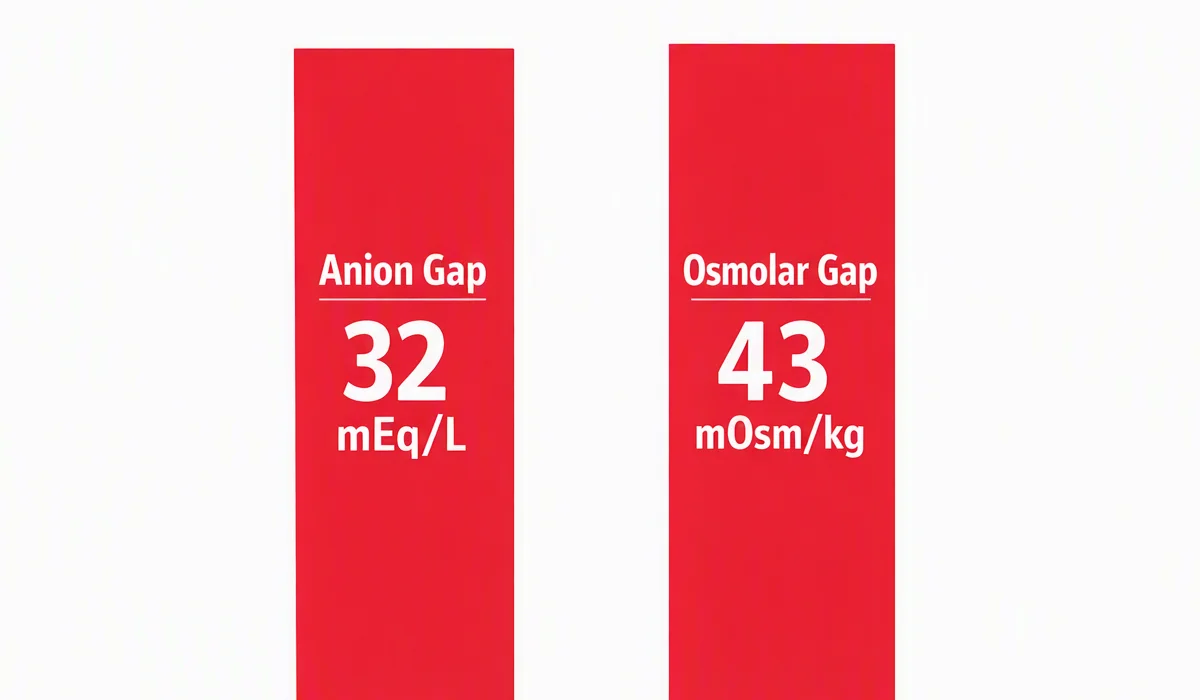
If albumin is low, the uncorrected result may fail to reflect the true acid burden. That is where albumin correction becomes valuable, especially when the clinical picture suggests a significant disorder but the raw gap seems unremarkable or low.
When to Use Corrected Anion Gap
The corrected anion gap is relied on when serum albumin is abnormal, especially when hypoalbuminemia is present. Because albumin influences the usual gap, lower protein levels can mask an elevated acid load. That is why albumin correction is often used in the right clinical context.
A corrected value helps refine lab interpretation when the raw result seems less impressive than expected. This is especially useful in patients who have low protein levels, where the uncorrected result may not fully capture the underlying acid-base status.
While correction formulas differ, the principle is consistent: if albumin is low, the observed gap should be increased to estimate what it would be with a typical albumin concentration. That adjusted estimate can better expose a hidden high anion gap state.
Use the corrected approach when:
- Albumin is below the normal reference range
- The patient appears acidotic but the raw gap is not elevated
- There is concern that the CMP may be masking an important abnormality
The corrected number is not always necessary, but it can make a major difference in interpretation. A smart use of the anion gap calculator includes knowing when the uncorrected result is not enough.
Typical Problems When Calculating Anion Gap
Although the formula is simple, a few frequent mistakes can distort the result. Focusing on details helps ensure precise calculation and better clinical significance.
- Incorrect units — verify all values are in the same unit, usually mEq/L
- Potassium add-in — do not add potassium unless you intentionally want the potassium-inclusive formula
- Entry error — copying the wrong sodium, chloride, or CO2 value can change the answer
- Reference intervals — always compare the number with the correct lab-specific range
A further concern is confusing CO2 with oxygen or another unrelated result. In a CMP, CO2 generally reflects total carbon dioxide and is used as a proxy for bicarbonate in the formula. If you accidentally use the wrong line from the report, the final number will be wrong.
It is also important not to ignore the overall pattern of the panel. An anion gap that looks abnormal may reflect a broader electrolyte imbalance, a data entry issue, or a transient physiologic change. Good lab interpretation depends on the whole picture, not just one calculated number.
Frequently Asked Questions About Anion Gap From CMP
How do you determine anion gap from CMP results?
Take the CMP values for sodium, chloride, and CO2. The basic formula is sodium minus chloride minus bicarbonate, with CO2 used as the bicarbonate estimate in most panels. An anion gap calculator can do this quickly, but you can also calculate it by hand using the reported numbers from the comprehensive metabolic panel.
What is considered the normal anion gap range?
The normal values depend on the lab’s method and reference range. Many labs consider the result normal within a fairly narrow interval, but there is no single universal cutoff. Always compare the number with the range printed on the report for accurate CMP interpretation.
Should potassium be part of the anion gap formula?
In most cases, no. Most routine calculations leave potassium out, even though a potassium-including version exists. For standard medical testing review, the more basic formula is the one most often used. If potassium is included, the result will be a bit higher, so it is important to know what formula is being applied.
What causes a high anion gap on a CMP?
A high result can suggest metabolic acidosis, especially from lactic acidosis, ketoacidosis, or exposure to toxic alcohols. It is a useful diagnostic clue but not a diagnosis by itself. The rest of the CMP, symptoms, and clinical context help determine the cause.
Why would an anion gap be low on lab results?
A low value is often linked to hypoalbuminemia, since albumin affects the calculation. It can also occur with paraproteinemia or a lab error. If the result seems unexpected, examine the raw electrolyte values, verify the report, and consider whether albumin correction is needed for a more precise interpretation.