Could severe infection Increase the Anion Gap? How to Interpret the Value
How is defined the Anion Gap?
The anion gap is a derived value that helps clinicians gauge the acid-base balance using a standard electrolyte panel. It looks at the main measured cations and negatively charged particles in serum chemistry, especially sodium, chloride, and bicarbonate. Because not every ion is directly measured, the result offers a useful snapshot of the body’s general acid-base balance.
In basic terms, the anion gap can be thought of as a diagnostic clue. A unexpectedly high result may suggest that acids are accumulating in the body, which can happen during critical illness. That is why clinicians often use it as part of a larger laboratory assessment rather than as a single answer.
Albumin also plays a role because it is one of the major unmeasured anions in the blood. When albumin is low, the anion gap can appear reduced than expected, which may obscure a real problem. This is one reason clinical interpretation should always consider the full serum chemistry picture instead of a single number.
How the Anion Gap Calculator Works
An Anion Gap Calculator employs common laboratory values to determine the gap. In a simplest form, it usually uses Na, Cl, and HCO3. Some versions also include potassium, although many clinicians calculate it without potassium because the difference is usually small. The exact formula may vary slightly, but the goal is the same: to identify an abnormal calculated value that may indicate a metabolic derangement.
The calculator is only as accurate as the lab values entered. If the blood sample is old, incomplete, or influenced by another condition, the output may be less useful. Still, as a screening tool, it can offer a fast diagnostic clue when evaluating a patient with suspected acidosis.
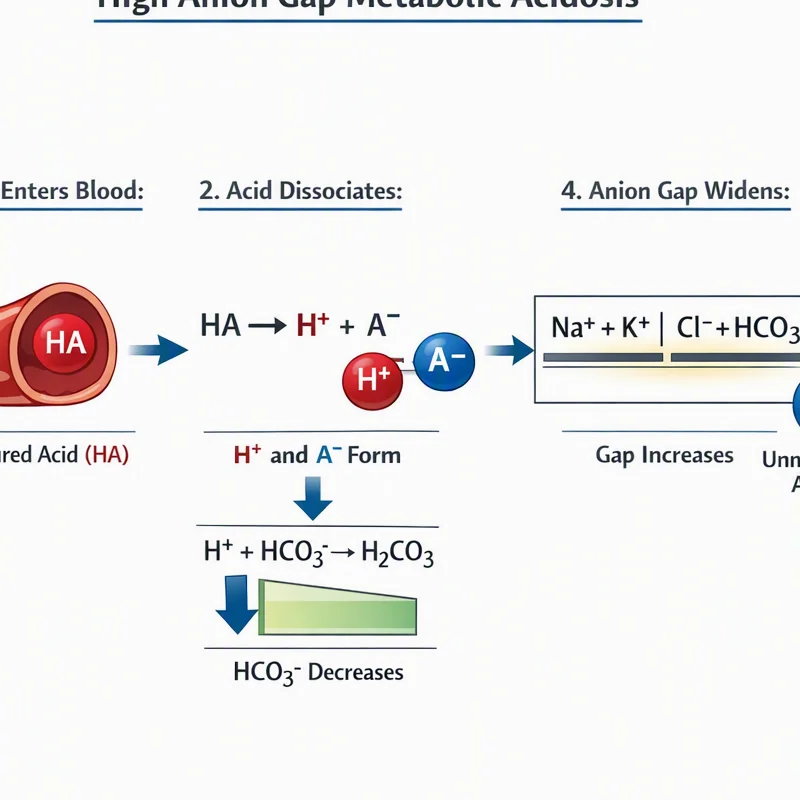
A higher anion gap often suggests a drop in bicarbonate because acids are being buffered and bicarbonate is consumed. This can reflect a problem in acid-base balance, but the reason behind that change matters even more than the number itself. The calculator helps identify anion gap elevation, while the clinician decides what underlying cause best matches.
Common inputs used by the calculator include:
- Sodium measurement
- Chloride level
- Bicarbonate level
- Potassium value in some formulas
- Albumin for corrected interpretation when needed
Can Sepsis Increase the Anion Gap?
Absolutely. sepsis can increase the anion gap, especially when it leads to lactic acidosis and wider acidic blood changes. The increase often happens because profound infection can limit oxygen delivery at the tissue level, causing cells to shift toward abnormal metabolism and produce more acid. This is frequently tied to poor tissue perfusion, which means tissues are not getting enough blood flow to meet their metabolic needs.
Not every person with sepsis has a high anion gap, and not each high anion gap means sepsis. But in the appropriate setting, an elevated gap can be an significant severity marker. It may point toward a escalating infection response, poor perfusion, or evolving critical illness that needs prompt attention.
sepsis can also advance to shock and organ failure, both of which can worsen metabolic problems. That is why the anion gap is best viewed as part of a wider clinical picture rather than a simple test for infection.
Why Sepsis May Lead To a High Anion Gap
One important cause is lactate. When tissues receive less oxygen, cells shift toward anaerobic metabolism, which creates lactate as a byproduct. As lactate builds up, it drives a high anion gap and a declining acid-base state.
This is particularly common in shock, where limited blood flow limits oxygen delivery. In sepsis, shock may develop because blood vessels dilate, fluid shifts out of the circulation, and the heart and organs struggle to maintain perfusion. The result is increased lactate accumulation and a clearer signal of metabolic stress.
Another key factor is organ dysfunction. The liver helps clear lactate, and the kidneys help manage acid-base balance. If either system is impaired during sepsis, the body may not remove acids efficiently, which can further increase the anion gap. This is why a rising gap can sometimes reflect both increased acid production and decreased clearance.
In clinical practice, the anion gap often changes because sepsis creates a chain reaction: infection leads to poor perfusion, poor perfusion leads to anaerobic metabolism, and anaerobic metabolism leads to acid buildup. That sequence is one reason clinicians track the anion gap along with lactate and other markers.
Additional Causes of a High Anion Gap
Sepsis is only a single cause of a elevated anion gap. Many other conditions can produce comparable laboratory findings, and each one has a different root cause and treatment approach.
Ketosis-related acidosis is a common reason, especially diabetic ketoacidosis. In this condition, the body breaks down fat for fuel and produces ketone acids. This can sharply lower bicarbonate and raise the anion gap.
Kidney failure is another major cause. When the kidneys cannot remove acids effectively, waste products and unmeasured acids accumulate in the blood. Related to this is uremia, where retained metabolic waste results in a raised anion gap and metabolic acidosis.
Toxic ingestions can also cause a notable increase in the gap. Substances such as methanol, ethylene glycol, or salicylates may disturb acid-base balance and cause dangerous metabolic abnormalities. In these cases, the anion gap is a helpful clue, but it must be matched with history, symptoms, and specific testing.
Because the same lab pattern can come from several different problems, a high anion gap should never be read alone. The clinical context determines whether the result points toward infection, anion gap units comparison kidney failure, ketoacidosis, poisoning, or a different cause.
When a Normal Anion Gap Does Doesn't Rule Out Sepsis
A normal anion gap cannot eliminate sepsis. This is particularly true in initial sepsis, when the infection reaction has started but tissue injury and acid accumulation are still not severe enough to alter the calculated value. A patient may still be critically unwell even if the gap appears normal on the first set of labs.
Albumin can also affect interpretation. Low albumin may artificially reduce the measured gap, masking a real acid base problem. If albumin is reduced, the apparent result may misrepresent the true severity of the metabolic disorder.
In addition, sepsis can involve combined acid-base imbalances. For example, a person may have metabolic acidosis from lactate and also have vomiting or respiratory changes that counterbalance the expected pattern. In those situations, the anion gap alone may seem normal or only mildly elevated even when serious illness is present.
That is why a normal result should be read as “not clearly abnormal,” not “sepsis is excluded.” The patient’s symptoms, exam findings, and other tests are much more important than a single number.
How Doctors Interpret Anion Gap in Sepsis
Providers evaluate the anion gap in sepsis as part of a broader assessment. They often compare it with the arterial blood gas, serum lactate, and base deficit to gauge how severe the acidosis is and whether the body is compensating properly.
The arterial blood gas shows the pH, carbon dioxide level, and bicarbonate level. Serum lactate offers a direct measure of lactate burden, which can support the suspicion of poor perfusion. Base deficit gives another way to estimate the degree of metabolic acidosis and can be useful in tracking changes over time.
Clinical interpretation is based on the full picture: blood pressure, mental status, urine output, breathing pattern, infection source, and response to treatment. A single high anion gap may indicate the idea of sepsis-related lactic acidosis, but it does not prove the diagnosis by itself.
In practice, a rising gap along with rising lactate, worsening hypotension, and other signs of instability may suggest that treatment needs to be escalated quickly. The number becomes most useful when it tracks with the patient’s condition rather than standing alone as an isolated lab result.
When to Get Urgent Medical Care
Pursue emergency care if a fever is paired with symptoms that suggest serious infection or worsening illness. Warning signs include confusion, rapid breathing, and low blood pressure, especially if they appear suddenly or are getting worse. These can be signs of sepsis or shock and need immediate evaluation.
Other concerning symptoms can include severe weakness, a fast heartbeat, decreased urination, or trouble staying awake. If an infection seems to be spreading and the person looks sicker rather than better, the situation should be treated as urgent.
A high anion gap on its own is not always an emergency, but if it appears alongside symptoms of critical illness, it should be taken seriously. Prompt care can help identify the underlying cause, whether that is sepsis, ketoacidosis, renal failure, or toxic ingestion.
Frequently Asked Questions
Can sepsis cause a high anion gap?
Yes, it can. Sepsis can cause a high anion gap, most often through lactic acidosis from tissue hypoperfusion and anaerobic metabolism. The result may reflect worsening metabolic acidosis and can act as a clue to serious illness.
Does a normal anion gap rule out sepsis?
Not necessarily. A normal anion gap does not rule out sepsis. Early sepsis, low albumin, or mixed acid-base disorders can make the value look normal even when the patient is quite ill.
Why does sepsis raise lactate?
Lactate increases in sepsis because poor perfusion and shock can push cells toward anaerobic metabolism. When oxygen delivery is limited, lactate accumulates and may contribute to a high anion gap and metabolic acidosis.
Is the anion gap identical to lactate?
They are different. The anion gap is a calculated value from electrolytes, while lactate is a measured substance in the blood. High lactate can raise the anion gap, but the two tests are not identical and should be interpreted separately.
When should a high anion gap be treated as an emergency?
A high anion gap should be treated as an emergency when it occurs with fever, confusion, rapid breathing, low blood pressure, or other signs of critical illness. Those findings may suggest sepsis, shock, or another dangerous cause of metabolic acidosis that needs immediate care.